British Museum fragment — new image set online
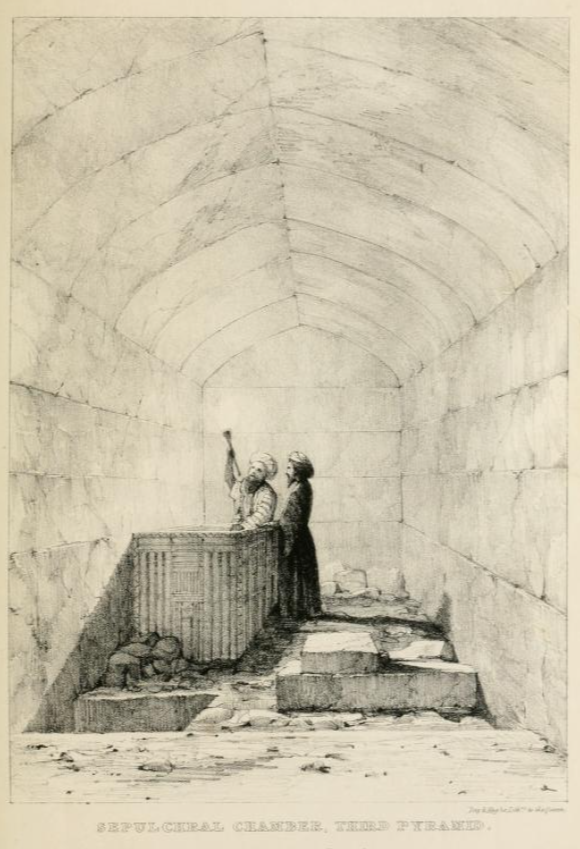
High-resolution colour images of the surviving basalt fragment enable closer comparison with Perring’s plate and support colour-matched reconstruction work.
Source: BM collection page; archived locally.
The reference point for verified first-hand sources and a living Research Dossier on the 1838 loss of Menkaure’s basalt sarcophagus aboard Beatrice.
From discovery (1837) to export decision and the shipwreck (1838), anchored by primary documents and a timeline.
Vyse (excavator, donor)
Campbell (consul, sponsor)
Sloane (consulate link)
Hawkins (BM Keeper)
Whichelo (captain/owner)
First-hand and peer-reviewed only:
Vyse, Operations carried on at the Pyramids of Gizeh (1840).
British Museum Trustees’ Minutes (1838–1839).
Lloyd’s Lists / Registers (1830s).
Nielsen, “Mercantile Networks …” Int. J. Maritime History 36:2 (2024).
Perring’s plates, British Museum fragment photography, engravings, route maps.
Scholarly captions with repository IDs.
Short, source-based notes. Each item references its evidence.
High-resolution colour images of the surviving basalt fragment enable closer comparison with Perring’s plate and support colour-matched reconstruction work.
Source: BM collection page; archived locally.
Minutes confirm acceptance of Vyse’s donation and funds for transport Giza → Alexandria → London.
Liverpool–Alexandria circuit with Malta calls; adverts list cotton and “natural history” cases alongside general cargo.